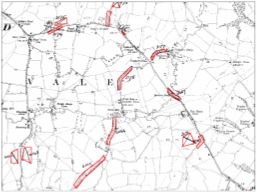
In all 7575 stands were surveyed across Dorset excluding the built-up area around Bournemouth and Poole and three parishes which were formerly part of Hampshire. All of the stands, which were marked on a set of the 2nd series 6″ maps, have now been scanned and rectified according to the current Ordnance Survey projection enabling each stand to be precisely marked on to the present OS map.
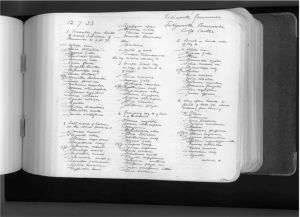
Each site is accompanied by a list of species found while walking the stand. The plates below show a list from the original diaries which have now been entered on to the Recorder database.
Good made a comprehensive survey of all the habitats in Dorset with particular attention to the more natural vegetation communities such as woodlands or meadows, but he also surveyed man-made habitats such as walls and open vegetation communities. In some cases more detailed descriptions of habitat type can be found which identify the dominant species. Examples include Bogs and Marshes with Marsh Pennywort (Hydrocotyle vulgaris) and Marsh St John’s-wort (Hypericum elodes) or Woods of Beech or Oak and Hazel.

A summary of the habitat type and number surveyed
| Habitats | Sites surveyed (Approx) |
|---|---|
| Aquatic vegetation: Rivers, Riversides, Streams, Lakes, Ponds, Pools | 350 |
| Marshes, Marshy meadows, Swamps | 315 |
| Maritime sites: Cliffs, Undercliffs, Rocky shores, Shingle Mud flats, Salt marsh. Sand Dunes | 240 |
| Heathland sites: Grass heath, Boggy heath, Bracken heath, Heath tracks | 505 |
| Grassland sites: Meadows, Pastures and hayfields, Embankments, roadsides | 1504 |
| Hedgebanks, Boundaries, Drove roads and Trackways | 1700 |
| Thickets: (Scrub) mixed with grassland | 431 |
| Woodland: Deciduous and Coniferous woodland, Parkland and copses etc | 1535 |
| Arable fields | 365 |
| Walls | 111 |
| Other sites: Quarries, Rabbit warrens, Fallow fields | 572 |
Habitat Comparisons

The information on each stand is now an invaluable source for comparison with the same places today. Many of the stands found outside conservation designations show lists of interesting species identifying habitats of conservation importance which are now no more. Traditional pastures and meadows appear to be one of the most changed habitats since the survey.
The map opposite shows some of the stands (in red) occurring within a Dorset Wildlife Trust Reserve (in blue).

 Dorset Environmental Records Centre