Biodiversity Character Areas have been developed by DERC to sit alongside Landscape Character Areas. They describe the landscape type and land use, main semi-natural habitats present and highlight species, species assemblages and features of particular interest.
Click here for a list of Key Species (coming soon)
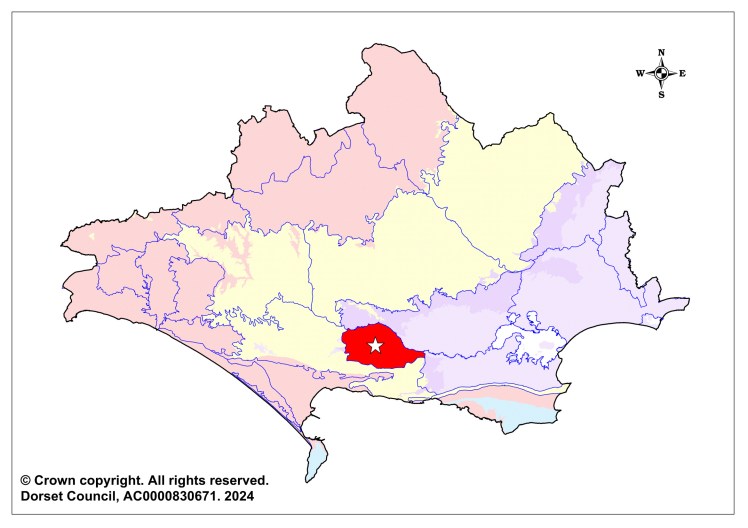
This area comprises the heaths in the southwest of the Poole Basin, south of the River Frome. Wool and Crossways are the largest settlements and agriculture dominates this mainly rural area with a significant minerals industry which has now spread from the heaths into the Frome floodplain. Woodland is mostly of planted origin with the few ancient woodlands small in size and restricted to the southwest of the area between Broadmayne and Owermoigne.
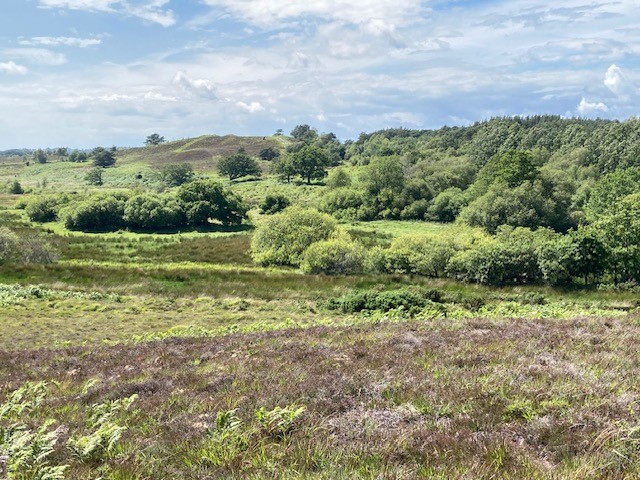
Former heathland has been fragmented but the majority of the remaining areas at Warmwell Heath, Tadnoll and Winfrith Heath are now protected within SSSIs. Dry heath, wet heath and valley mires are all represented with small stands of acid grassland. These areas have a rich flora and fauna with many of the heathland specialists characteristic of the Dorset Heaths present. Rarer species include Bog Hair-grass, Slender Sedge, Pillwort, Tormentil Mining Bee and Five-banded Weevil Wasp. The area is also notable for the only surviving population of Heath Lobelia in the county and one of only seven remaining in Britain.
The Tadnoll Brook runs through the area joining the River Frome at Broomhill. Arising from the chalk at Broadmayne, it is a chalk stream running through an acidic bedrock with unusual fen and fen-meadow vegetation present along its narrow floodplain supporting local plants such as Marsh Cinquefoil, Marsh Valerian, Tawny Sedge and Great Burnet, the last a scarce species in Southern England.
Restoration of former mineral workings near Crossways has produced significant wetlands providing habitat for breeding and wintering wetland birds, plus an important assemblage of dragonflies including new potential colonists such as Scarlet Darter and Lesser Emperor. Drier areas are being restored to heathland and acid grassland and are developing a rich flora and fauna.
The Western Heaths BCA falls within the Western Poole Basin Heaths Landscape Character Area (heath/forest mosaic) and Central Frome Valley BCA (valley pasture) and covers 4,931 hectares.
Summary of Key Features
- Remnants of lowland heathland & valley mires with rich flora & fauna
- Important stands of fen, fen-meadow and rush-pasture along the Tadnoll Brook
- Restored former mineral workings with a diverse flora and fauna
Issues:
- Loss and fragmentation of semi-natural habitats, particularly the heaths
- Enrichment of watercourses
Species assemblages of importance within the BCA
- Invertebrates of bare ground on sandy & clayey heaths
- Invertebrates of mature and senescent stages of dry heath
- Invertebrates of wet heaths
- Invertebrates of heathland edge & marginal habitats
- Plants of dry & humid heath and grass-heath
- Plants of open, peaty, winter-wet hollows on wet heath
- Plants of heathland trackways
- Plants of open valley mires & acid flushes
- Bryophytes of valley mires & acid flushes
- Invertebrates of open Sphagnum-rich valley mires
- Dragonflies & damselflies of mires and acid pools
- Plants of nutrient-poor heathland pools and ponds
- Invertebrates of nutrient-poor heathland pools and ponds
- Heathland birds
- Heathland reptiles
- Plants of wet woodland
- Plants of rush-pastures & fen-meadows
- Invertebrates of fens, fen-meadows & rush-pastures
- Plants of nutrient-poor waterbodies
- Dragonflies and damselflies of ponds and lakes
- Breeding birds of ponds and lakes
- Wintering and passage birds of inland water bodies
 Dorset Environmental Records Centre