Biodiversity Character Areas have been developed by DERC to sit alongside Landscape Character Areas. They describe the landscape type and land use, main semi-natural habitats present and highlight species, species assemblages and features of particular interest.
Click here for a list of Key Species (coming soon)
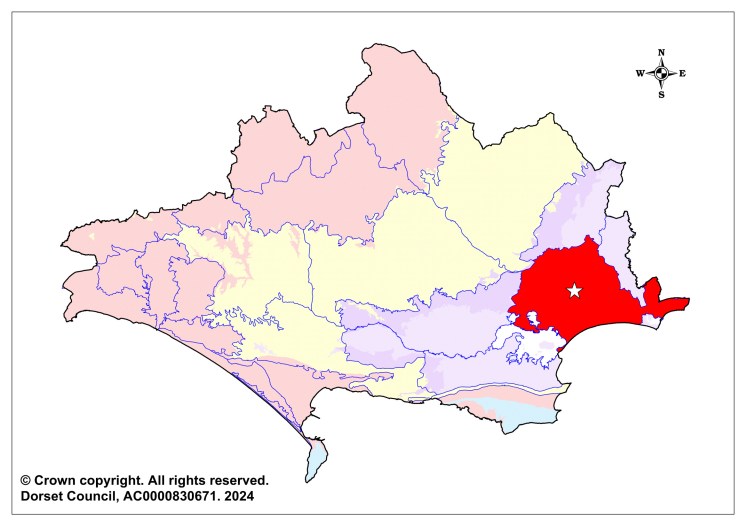
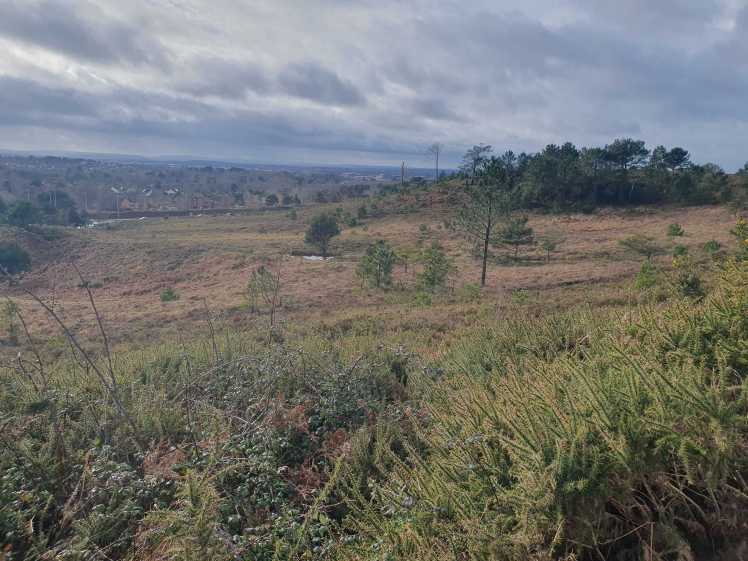
This BCA covers the major urban area within Bournemouth, Christchurch and Poole Council, plus Wimborne, Ferndown and West Moors north of the River Stour. Two hundred years ago much of the area away from the Stour floodplain was heathland, today it is much fragmented with Canford Heath and Upton Heath the largest remaining areas, plus smaller fragments at Bourne Bottom, Ferndown Common, Merritown Heath, Parley Common, Slop Bog and Turbary Common. These support many of the specialist birds, invertebrates, plant and reptiles for which the Dorset Heaths are of international importance.
The Tertiary cliffs stretch for 10-km from Canford Cliffs to Southbourne and are much altered both above and below, but they still retain patches of semi-natural heath vegetation plus important geological outcrops of the Poole Formation. Inevitably there are many non-native plants that have become established and these are gradually being removed where accessible with several areas grazed by Goats. On the clifftop there are summer-parched acid grasslands within Boscombe & Southbourne Overcliff LNR that are important for scarce annual plants, plus remnants of the former sand dune vegetation. The beaches are heavily used particularly in the summer months but sand dune and shingle vegetation is developing locally at Sandbanks and from Friar’s Cliff to Highcliffe, with local plants such as Sea Kale, Sea Sandwort and Sea Spurge.
Ancient semi-natural woodland is a rare habitat in the area with a few stands confined to the northern part. More recent secondary woodland is more widespread in the form of broadleaved and coniferous plantations, and more natural stands of Birch-Oak-Bracken woodlands that have developed in the absence of grazing around fringes of the heaths. There are significant assemblages of veteran trees within Upton Country Park and in more urban settings within Christchurch, providing valuable habitat for deadwood (saproxylic) invertebrates, fungi and epiphytic lichens.
The Stour Valley is mainly farmland with little semi-natural grassland remaining. The river itself is slow-moving with a silty base but has a diverse aquatic flora and a well-developed emergent and marginal flora. The Scarce Chaser dragonfly and White-legged Damselfly are widespread along the Stour. The former gravel pits in the floodplain at Longham Lakes are important for wetland birds and their assemblage of dragonflies and damselflies. Within the conurbation there are numerous public gardens and parks that are managed for both recreation and biodiversity, these forming important ecological corridors and stepping stones. Churchyards and cemeteries include areas of old grassland, usually acidic in nature, which can support assemblages of fungi including several species rare in the county.
The Urban Heaths & the Conurbation BCA falls within the Urban Heaths & Conurbation Landscape Character Area (clay valley) and covers 19,020 hectares.
Summary of Key Features
- Remnants of lowland heathland & valley mires with a rich flora & fauna, including Canford Heath, one of the largest fragments of lowland heathland remaining in the Poole Basin
- Wide green corridor of the Stour Valley from Wimborne to Christchurch with the river itself important and other wetland features such as Longham Lakes
- Sand & clay cliffs from Canford Cliffs to Southbourne with remnants of heath vegetation, plus on the cliff top parched acid grassland and relict sand dune vegetation supporting a very rich flora
- Important network of local nature reserves, parks and greenspace being managed for both biodiversity and recreation
Issues:
- Loss and fragmentation of semi-natural habitats, particularly the heaths
- Urban pressures such as disturbance and wildfires
- Enrichment of watercourses
Species assemblages of importance within the BCA
- Invertebrates of bare ground on sandy & clayey heaths
- Invertebrates of mature and senescent stages of dry heath
- Invertebrates of wet heaths
- Invertebrates of heathland edge & marginal habitats
- Plants of dry & humid heath and grass-heath
- Plants of open valley mires & acid flushes
- Bryophytes of valley mires & acid flushes
- Dragonflies & damselflies of mires and acid pools
- Heathland birds
- Plants of parched acid grassland
- Invertebrates of open, parched acid grassland
- Woodland birds
- Plants of rush-pastures & fen-meadows
- Plants of species-rich lowland rivers
- Riparian dragonflies & damselflies
- Dragonflies & damselflies of ponds & lakes
- Breeding birds of ponds & lakes
- Wintering & passage birds of inland water bodies
- Plants of pioneer, mobile & semi-fixed sand dunes
 Dorset Environmental Records Centre