Biodiversity Character Areas have been developed by DERC to sit alongside Landscape Character Areas. They describe the landscape type and land use, main semi-natural habitats present and highlight species, species assemblages and features of particular interest.

Click here for a list of Key Species
Poole Harbour is one of the largest natural harbours in the world but is essentially a flooded river valley (or valleys) and has several special features in being quite shallow, having a very narrow entrance and a daily double tidal regime. The northern shore is developed with industry, and more recently recreation, having significant impacts. The southern and western shorelines are largely undeveloped and have important transitions from brackish to freshwater and terrestrial habitat such as mire, heathland and wet woodland. The southern shore is less accessible, away from the main tourist ‘honey-pots’ with large car parks.
The three main non-marine habitats are mudflats, saltmarsh and reedbed with the harbour supporting the majority of the Dorset resource. The mudflats are the main feeding habitats for the wintering and passage wader and waterfowl that may utilise the adjacent saltmarsh at high tide.
The area of saltmarsh has varied considerably over the last century. Following the first record in the 1890s Spartina x townsendii and later Spartina anglica spread very quickly, trapping sediment and forming extensive areas of lower saltmarsh covering some 860-ha by the 1920s. Since that time it has undergone a sustained decline and by 2000 only 350-ha were recorded, the reasons for the decline are multiple and complex. Due to the shallow nature of the harbour the saltmarsh often forms narrow zones but can be quite varied with lower, middle and upper zones well represented and each supporting its own plant communities, with the upper marsh supporting the most diversity. At the upper reaches there are freshwater seepages that produce interesting vegetation types and important invertebrate assemblages.
Reedbeds are most extensive in the west of the Harbour with one on Brownsea Island. They vary from freshwater to brackish, most do not receive any management, and some are becoming invaded by scrub.
Sika Deer has become a significant threat in some places as the deer use them extensively and graze areas heavily preventing regrowth. The reedbeds are particularly important for birds, both those breeding, such as Water Rail, Cetti’s Warbler and Marsh Harrier, and for those passage species feeding and resting on migration. Invertebrates include a number of specialists that feed on reeds as well as a range of wetland species.
At 200-ha Brownsea Island is the largest of the five islands and is famous for its Red Squirrels, one of the few remaining populations in Southern England, and for the lagoon with its colony of breeding terns and wintering wildfowl and waders. The Island has other important habitats with areas of dry heath, acid grassland, wet woodland, reedbeds, two mesotrophic lakes and a small area of developing sand dunes.
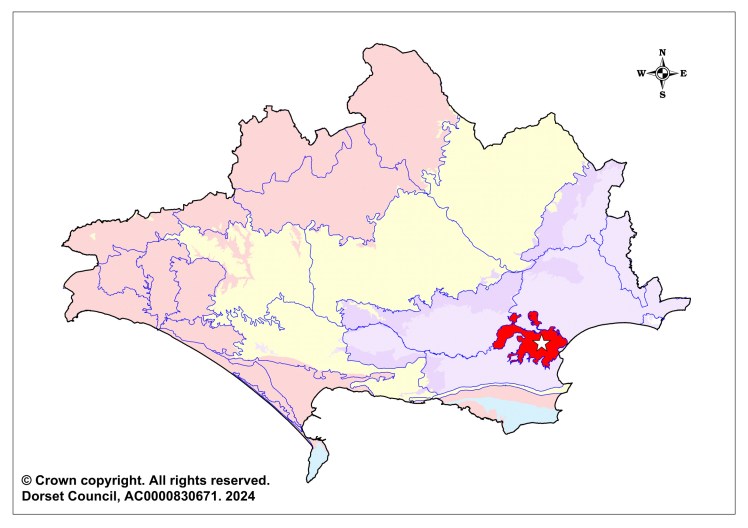
The Poole Harbour BCA falls within the Poole Harbour Landscape Character Area (tidal waters) and covers 3,857 hectares.
Summary of Key Features
- Internationally important for wintering and passage wildfowl and waders on the mudflats.
- The largest Dorset stands of saltmarsh showing a transition from lower to upper marsh zones with their own plant communities.
- Extensive reedbeds with transitions from freshwater to brackish, important for breeding and passage birds.
- See-grass beds in the northeast of the harbour
- Small areas of important terrestrial habitats including lowland heathland, acid grassland, wet woodland and reedbeds on Brownsea Island.
Issues:
- Impacts of non-native species such as Sika Deer on the reedbeds and saltmarsh.
- Enrichment of watercourses flowing into the harbour resulting in algal blooms on the mudflats.
- Disturbance of resting and roosting birds at high tide.
- Continuing loss of lower saltmarsh through die-back of the Cord-grass.
Species assemblages of importance within the BCA
- Wintering birds of mudflats & saltmarshes
- Breeding birds of saltmarshes and coastal grasslands
- Plants of pioneer & lower saltmarshes
- Plants of middle & upper saltmarshes
- Invertebrates of upper saltmarshes & brackish marshes
- Invertebrates associated with strandlines
- Breeding birds of reedbeds
- Invertebrates of reedbeds
- Plants of pioneer, mobile & semi-fixed sand dunes
- Dragonflies & damselflies of ponds & lakes
- Plants of open, parched acid grassland
 Dorset Environmental Records Centre