Biodiversity Character Areas have been developed by DERC to sit alongside Landscape Character Areas. They describe the landscape type and land use, main semi-natural habitats present and highlight species, species assemblages and features of particular interest.
Click here for a list of Key Species
An area of clays and limestone to the north of the chalk outcrop, there are numerous streams originating from springs at the junction of the Chalk-Greensand-Gault that generally running north or northwest. The land is undulating with more defined ridges and valleys in the southeast, around Melbury Park, and the extreme southwest near Chedington, where land rises to 180 metres and 205m above sea level respectively, and gentler towards the north near Sutton Bingham Reservoir at 60m above sea level. In the east the ridges are formed on harder Oolitic limestone of the Corallian and Forest Marble Formations with clays dominating further west particularly the Fuller’s Earth and Frome Clay Formations, and more locally the Kellaways Formation and Oxford Clay. Exposures in streams north of Corscombe are locally very rich in fossils of international geological importance.
The area is rural with no towns and scattered, small to medium-sized villages and farmsteads, some dating back to the Domesday, with many buildings built of the local honey-coloured limestone. Parkland and associated amenity and forestry plantings around Melbury House dominate the eastern third of the area, the remainder being mainly agricultural land with scattered woodland of varying size and composition. The hedgebanks and verges of the numerous small roads have a colourful spring flora, and there are several double-hedged green lanes and droves which act as important ecological corridors across the landscape.
Ancient woodland is scattered across the area. Most woods are small (<10-ha) and formerly had a coppice-with-standards structure but the cessation of coppicing in many woods has led to a decline in woodland butterflies and birds. Brackett’s Coppice is known to support a rich assemblage of woodland fungi including several not known elsewhere in Dorset. Wet woodland, especially of Alder, has formed around springlines and along streams and has an important invertebrate fauna.
The deer park at Melbury Sampford dates from the Tudor era and encompasses areas of wood-pasture and groups of parkland trees. Here there are many veteran Oaks that carry a lichen assemblage of international importance, with many rare and scarce species, and additional interest from fungi and invertebrates associated with dead wood features. The interest extends outside of the park into the adjoining woodlands and pasture trees.
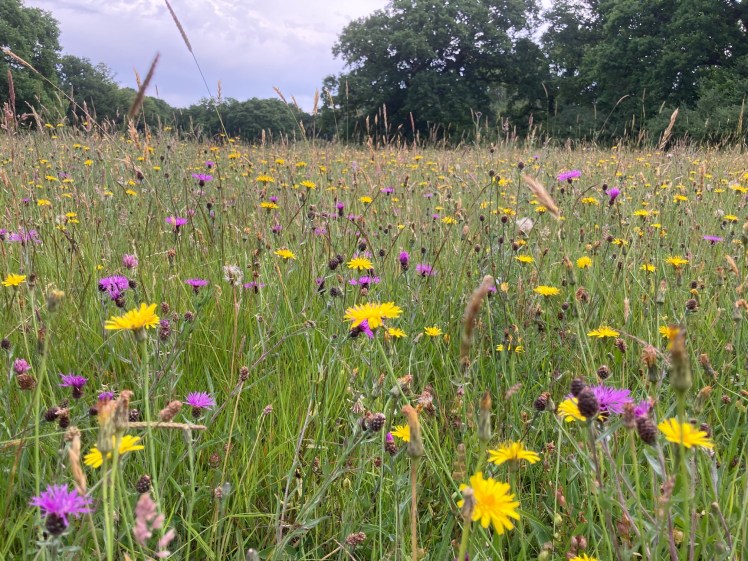
Semi-natural grassland is now rare in the area mainly found around the Dorset Wildlife Trust and Plantlife Reserves at Brackett’s Coppice and Ryewater Farm with stands of neutral grassland, rush-pasture and fen-meadow supporting a rich flora and fauna, the latter includes the Marsh Fritillary butterfly.
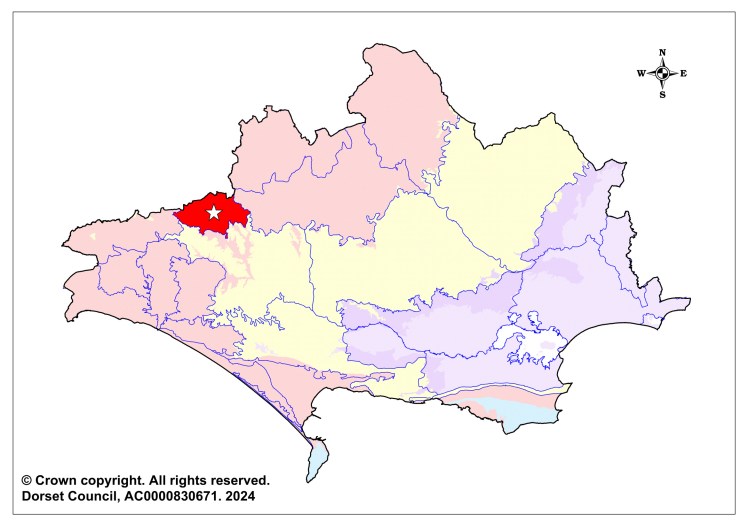
The Northwest Vales & Hills BCA falls within the Halstock Vales (clay vale) and Melbury Hills (Limestone Hills) Landscape Character Areas and covers 3,971 hectares.
Summary of Key Features
- Parkland, wood-pasture and woodland in and around Melbury Park
- Semi-natural neutral grassland, rush-pasture and fen-meadow around Brackett’s Coppice
- Scattered ancient woodlands across the area, mainly small and often along small watercourses
- Numerous hedgerows including a number of double-hedged green-lanes
Issues:
- Loss and fragmentation of semi-natural grassland
- Enrichment of road verges with rank nutrient rich vegetation replacing semi-natural grassland vegetation
- Enrichment of watercourses
- Loss and of field trees and lack of replacement
Species assemblages of importance within the BCA
- Plants of ancient woodland
- Plants of wet woodland
- Fungi of old growth woodland
- Fungi of wet woodland
- Lichens of old growth woodland
- Lichens of mature and veteran wayside and pasture trees
- Saproxylic invertebrates associated with veteran trees and dead wood features
- Invertebrates of wet woodland
- Woodland birds
- Woodland bats
- Plants of ancient and unimproved grasslands
- Plants of rush-pastures & fen-meadows
- Fungi of ancient and unimproved grasslands
- Butterflies and day-flying moths of grassland
- Invertebrates of fens, fen-meadows and basic flushes
- Plants of species-rich hedgerows & hedgebanks
- Invertebrates of species-rich hedgerows & hedgebanks
- Plants of old droves, green lanes & Holloways
 Dorset Environmental Records Centre