Biodiversity Character Areas have been developed by DERC to sit alongside Landscape Character Areas. They describe the landscape type and land use, main semi-natural habitats present and highlight species, species assemblages and features of particular interest.
Click here for a list of Key Species (coming soon)
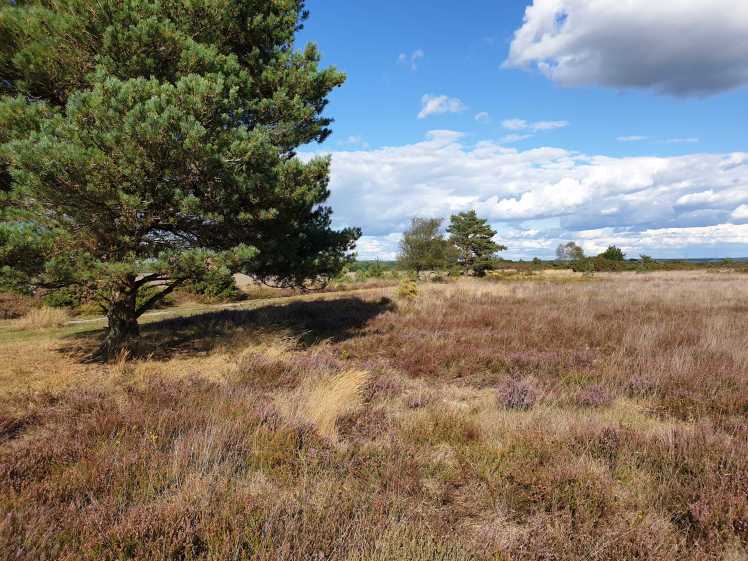
The northern part of the Poole Basin is a diverse area over a wide band of London Clay, with a mixture of farmland and woodland and scattered villages. East of this is the Poole Formation which historically was dominated by heathland, this now much more fragmented than formerly by a combination of afforestation, agriculture and development. Holt Heath and Cranborne Common are the largest surviving fragments of lowland heathland and include extensive valley mires. There are smaller stands at Dewlands Common, Horton Common, Lower Common and within MoD land at West Moors. Many of the heathland specialist birds, invertebrates, plants and reptiles characteristic of the Dorset Heaths are present. Within the extensive conifer plantations there are small fragments of heath either as clearings or the verges of wide rides; young plantations and clear-fell areas are important for Nightjar and Woodlark.
The clay from Holt northeast to Alderholt is one of the most densely wooded areas in the county. Many were formerly managed as coppice-with-standards, but the decline in traditional forestry management over the last century has meant woods have become broadly more shady and cooler. There is a rich flora including Green Hellebore, Common Cow-wheat, Orpine and Wild Daffodil, There are two large stands of native Small-leaved Lime, a rare tree in Dorset. As with other areas of Dorset specialist coppice-woodland butterflies and moths have declined, but there are a number of scarce moths associated with ancient woodland such as Great Oak Beauty and Scarce Merville-du-Jour. Holt Forest is a former wood-pasture with one of the largest assemblages of veteran trees in the county, and is one of the few places in Dorset where Beech is a native tree. Formerly much more open, with the cessation of grazing Birch and Holly have become abundant between the older Oaks.
Areas of semi-natural grassland and rush-pasture retain a rich flora with a number of scarce and declining plants such as Sneezewort, Dyer’s Greenweed, Flea Sedge, Green-winged Orchid, Meadow Thistle and Pepper Saxifrage. Wide road verges and village greens were once a Dorset stronghold for Chamomile but it is now very rare with one large population on Pamphill Green. Rivers are mainly small and drain eastwards and then south eventually entering the Stour. The Crane originates on the chalk and is a seasonal chalk stream at its headwaters, it finally becomes the Moors River from below where the Ebblake Stream joins south of Verwood. Uddens Water is more acidic in nature from streams arising from the London Clay and Poole Formation, and meets the Moors River at Trickett’s Cross. The Moors River especially is known for its important riparian dragonfly populations and other still-water species have colonised the old gravel workings now within Moors Valley Country Park. The narrow floodplains were enclosed earlier than the adjacent heaths as their fertile soils are more favourable for farming, especially for the production of hay. Semi-natural neutral grasslands, rush-pasture and fen-meadow are now rare within the floodplains but are present in the Crane and Moors valleys.
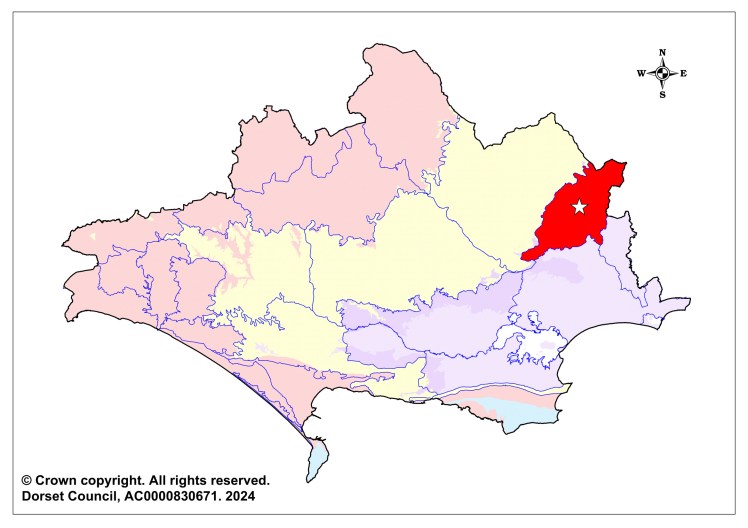
The Northern Heaths BCA falls within the North Poole Basin Heaths Landscape Character Area (heath/farmland mosaic) and North Poole Basin Clay LCA. It covers 9,994 hectares.
Summary of Key Features
- Remnants of lowland heathland & valley mires with a rich flora & fauna, including Holt Heath, one of the largest fragments of lowland heathland remaining in the Poole Basin
- A well wooded belt on the London Clay fringing the heaths with small remnants of neutral grassland and rush-pasture
- Significant assemblage of veteran trees in the former wood-pasture of Holt Forest
Issues:
- Loss and fragmentation of semi-natural habitats, particularly the heaths and ancient semi-natural woodland
- Urban issues on the heaths such as disturbance, fly-tipping and wildfires
- Enrichment of watercourses
- Decline in traditional woodland management resulting in cooler and shadier woods with a decline of birds and invertebrates
Species assemblages of importance within the BCA
- Invertebrates of bare ground on sandy & clayey heaths
- Invertebrates of mature and senescent stages of dry heath
- Invertebrates of wet heaths
- Invertebrates of heathland edge & marginal habitats
- Plants of dry & humid heath and grass-heath
- Plants of open, peaty, winter-wet hollows on wet heath
- Plants of heathland trackways
- Plants of open valley mires & acid flushes
- Bryophytes of valley mires & acid flushes
- Invertebrates of open Sphagnum-rich valley mires
- Dragonflies & damselflies of mires and acid pools
- Heathland birds
- Plants of ancient & long-established woodland
- Lichens of old growth woodland & wood-pasture
- Saproxylic invertebrates associated with dead wood habitats and veteran trees in old growth woodland
- Moths of ancient & long-established woodland & parkland
- Woodland birds
- Woodland bats
- Plants of wet woodland
- Plants of rush-pastures & fen-meadows
- Invertebrates of fens, fen-meadows & rush-pastures
- Riparian dragonflies & damselflies
 Dorset Environmental Records Centre