Biodiversity Character Areas have been developed by DERC to sit alongside Landscape Character Areas. They describe the landscape type and land use, main semi-natural habitats present and highlight species, species assemblages and features of particular interest.
Click here for a list of Key Species (coming shortly)
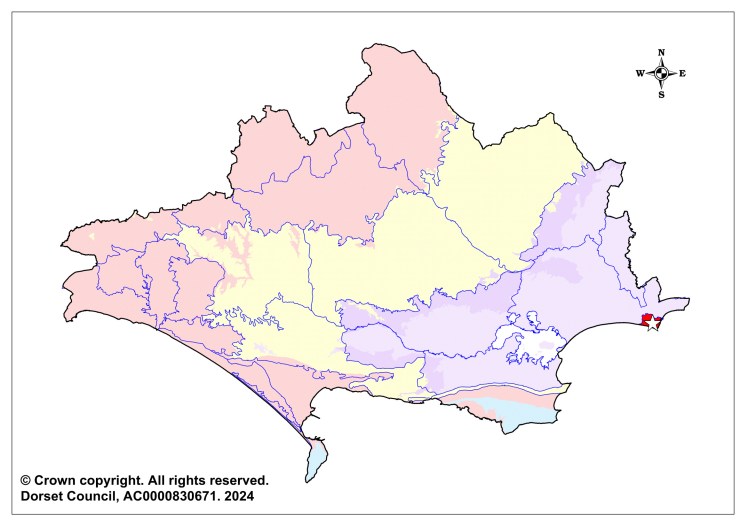
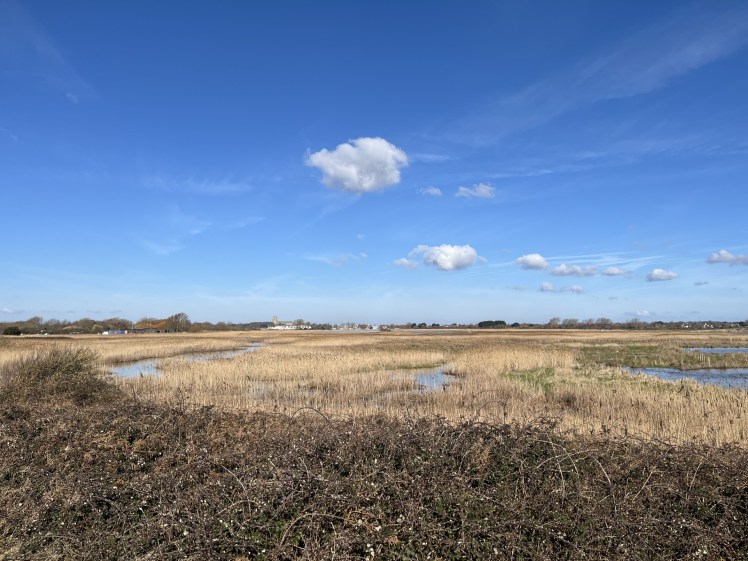
This is the smallest BCA but Christchurch Harbour is a ‘biodiversity hotspot’ with a wide range habitats of national and international importance and many scarce and threatened species. Stanpit Marsh on the north side of the harbour and Hengistbury Head on the south are both important sites in their own right, recognised as Local Nature Reserves and within Christchurch Harbour Site of Special Scientific Interest.
There are significant stands of saltmarsh on both sides of the harbour with scarce species including Bulbous Foxtail and Marsh Mallow, plus the only Dorset populations of Sea Aster Bee. The upper marsh and coastal grazing marsh have rich invertebrate fauna with Atylotus latistriatus, Haematopota bigoti, Sphaerophoria lowei and Stratiomys singularior, all rare or scarce species in Dorset.
The top of Hengistbury Head has dry heathland with Bracken and Gorse and maritime plants on blown sand along the cliff edge, an unusual feature in Dorset. Bare sandy and clayey ground on Warren Hill and Ironstone Quarry is important for many ground nesting bees and wasps including the scarce Andrena argentata, Cryptocheilus notatus, Lasioglossum brevicorne and Panurgus banksianus.
On lower sandy ground on Hengistbury and Crouch Hill at Stanpit there is species-rich summer-parched acid grassland which has many local and scarce spring-flowering annuals including Mossy Stonecrop, Spring Vetch, Suffocated Clover and Upright Chickweed. The abundance of yellow composites flowering in the spring and summer in these grasslands provide a very valuable pollen and nectar resource for the many bees present in the area. Several pools have been constructed for Natterjack Toad which has been re-introduced to the area.
The area has the second largest area of sand dunes in the county on the southeast tip of Hengistbury Head and along Mudeford Spit. The specialists includes Ray’s Knotgrass, Sea Holly, Sea Bindweed and Sea Spurge, plus the invertebrates Acrosanthe annulata, Megachile leachella and Oxybelus argentatus. An enclosure at the tip of Mudeford Spit has recently attracted a breeding pair of Ringed Plover.
The harbour itself provides habitat for a range of wintering and passage wading birds and waterfowl. The reedbeds adjoining the harbour provide a habitat for Water Rail, Reed Warbler and Reed Bunting. Marsh Harrier is an increasingly frequent visitor with a small winter roost and may breed in the future.
The Christchurch Harbour and Hengistbury Head BCA falls within the Christchurch Harbour Landscape Character Area (tidal water) and Hengistbury Head LCA (lowland heathland). It covers 433 hectares.
Summary of Key Features
- A biodiversity ‘hotspot’ with a diverse range of semi-natural habitats within an otherwise urban area
- Heathland and acid grassland with a rich flora and fauna
- Sand dunes on Mudeford Spit and the tip of Hengistbury Head, plus developing dune-heath at the latter
- Saltmarsh and reedbeds around the Harbour
- Freshwater to brackish grazing marsh on Priory Marsh
Issues:
- Disturbance, especially to ground-nesting birds and strandline flora on beaches
- Enrichment of waters entering the harbour
Species assemblages of importance within the BCA
- Invertebrates of bare ground on sandy & clayey heaths
- Invertebrates of mature and senescent stages of dry heath
- Invertebrates of heathland edge & marginal habitats
- Plants of dry & humid heath and grass-heath
- Heathland birds
- Plants of open, parched acid grassland
- Invertebrates of open, parched acid grassland
- Woodland birds
- Breeding birds of reedbeds
- Plants of seasonally flooded grasslands, including hollows and shallow pools
- Plants of pioneer, mobile & semi-fixed sand dunes
- Invertebrates of open acid sand dunes
- Plants of pioneer, lower & middle saltmarsh
- Plants of upper saltmarsh and freshwater transitions
- Plants of brackish ground and coastal grazing marsh
- Invertebrates of upper saltmarshes & brackish marshes
- Invertebrates of open sand & clay on slumping soft cliffs
- Wintering waterbirds of mudflats & saltmarshes
- Beach nesting birds
 Dorset Environmental Records Centre